
 English
 Portugues
 Pусский
 Français
 Deutsch
 한국어
한국어 العربية
 Italiano
 Svenska
 Polski
 ไทย
ไทย Türk dili
 हिन्दी
 Tiếng Việt
 中文
中文 dansk
dansk қазақ
қазақ বাংলা
বাংলা فارسی
فارسی українська
 беларускі
 Suomalainen
 o'zbek
 Србија
 پښتو
پښتو საქართველოს
 Shqipëria
 Afrikaans
 Kikongo
Molde de inyección de tres vías
Three-Way Injection Mold: An Overview A three-way injection mold is a specialized tool used in plastic injection molding to produce complex parts with multiple undercuts or intricate geometries. Unlike traditional two-plate or even multi-cavity molds, a three-way mold incorporates an additional movement axis, allowing for more sophisticated part designs that would otherwise require secondary operations or complex ejection mechanisms. Design and Functionality The defining feature of a three-way injection mold is its ability to open and separate in three distinct directions (typically vertical and two lateral movements). This is achieved through sliders, lifters, or angular pins that move perpendicular or at an angle to the main mold opening direction. These mechanisms enable the mold to release parts with undercuts—features that would otherwise trap the component inside the mold if only a straight pull were possible. 1. Core Mechanisms: - Sliders: Hydraulic or mechanical sliders move sideways to free undercuts before the main mold opens. - Lifters: These components move at an angle, combining vertical and horizontal motion to release complex shapes. - Rotary Cores: For cylindrical parts with threaded or helical features, rotating cores unscrew the part during ejection. 2. Applications: Three-way molds are ideal for parts like threaded caps, medical devices, automotive components, and consumer products with side holes, clips, or interlocking features. They reduce post-molding assembly by integrating multiple functionalities into a single molded piece. Advantages - Design Flexibility: Enables production of parts with complex geometries without compromising structural integrity. - Cost Efficiency: Eliminates secondary machining or assembly steps, reducing labor and material waste. - Precision: Ensures consistent part quality with tight tolerances, critical for industries like aerospace and medical manufacturing. Challenges - Higher Tooling Costs: The added complexity increases mold design and manufacturing expenses. - Maintenance: Moving components like sliders require regular upkeep to prevent wear and misalignment. - Cycle Time: Additional movements may slightly extend cycle times compared to simpler molds. Conclusion Three-way injection molds represent an advanced solution for manufacturing intricate plastic components efficiently. By leveraging multi-directional movements, they expand design possibilities while maintaining production efficiency. While they demand higher initial investment and expertise, their ability to produce complex parts in a single cycle makes them invaluable for high-precision industries. Proper design, material selection, and maintenance are key to maximizing their performance and longevity.
Producto
Categoría:
-
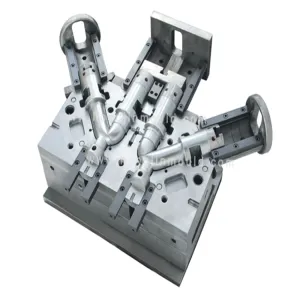
Codo de PVC con molde para instalación de tuberías de puerta
Su clasificación: Molde para instalación de tuberías de PVCVistas: 507Número:Tiempo de liberación: 2025-11-13 21:12:29Codo de PVC con molde para instalación de tuberías de puertaNombre del molde:Codo de PVC con molde para instalación de tuberías de puertaCavidad: 2 cavidadesTamaño del molde: 75 mm.Acero para moldes: Alemania 2316, china 2316 o 4cr13 para la cavidad y el núcleo.Puerta: puerta directaestructura del molde: cilindro de aceiteDureza del núcleo/cavidad: HRC 40-45°grados después del tratamiento térmico al vacíoMáquina de moldeo por inyección: 380 T Problema del molde de instalación de tuberías de codo de PVC con puerta y la solución1. Falta de material: El fenómeno de que el molde no se puede llena...
Noticias
Categoría:
-
[industry news]molde plegable para instalación de tuberías
2025-01-15 21:31:48
Caso
Categoría:
Video
Categoría:

Descargar
Categoría:
¡Sin resultados de búsqueda!
Reclutamiento
Categoría:
¡Sin resultados de búsqueda!
Productos recomendados
¡Sin resultados de búsqueda!




 Whatsapp
 Teléfono